
The History of Bakuriani — From Ancient Times to a Mountain Ski Resort
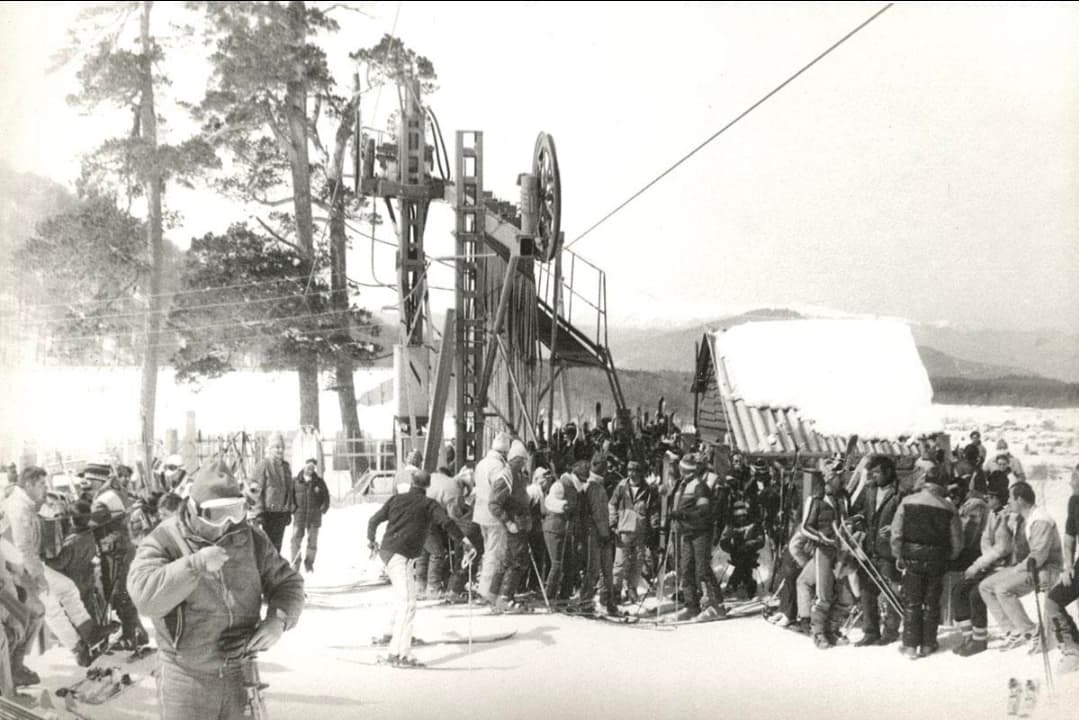
The History of Bakuriani — From Ancient Times to a Mountain Ski Resort
Today, the name Bakuriani brings to mind snow-covered mountains, ski lifts and winter sports. Yet the history of this well-known Georgian resort began long before organized skiing appeared here.
Archaeological sites dating to the later Neolithic period have been discovered in the Bakuriani area. Its past is also connected with eighteenth-century historical records, Ukrainian families who settled in the Borjomi Gorge in the nineteenth century, the railway known as the “Kukushka,” and the people who helped establish skiing as an organized sport in Georgia.
How did this area develop from a small settlement into one of Georgia’s best-known mountain resorts?
The answer lies in several centuries of history.
Bakuriani Before It Became a Resort
According to the Georgian Encyclopedia, archaeological sites dating to the later Neolithic period have been discovered in the surrounding area, particularly near Sakochavi and the Andesite quarries. Other archaeological remains from later periods have also been identified, dating as far back as the end of the second millennium BC.
Remains of walls belonging to pre-feudal structures have also survived near the present-day Bakuriani Botanical Garden.
The name Bakuriani appears in historical records as well. In his work “Description of the Kingdom of Georgia,” dated 1745, the Georgian historian and geographer Vakhushti Batonishvili referred to the place as “Bakuliani.”
These records show that the history of Bakuriani is much older than its modern role as a resort.
1816 — Ukrainian Families Settle in the Borjomi Gorge
One interesting chapter in Bakuriani’s history dates back to the nineteenth century.
According to the National Archives of Georgia, 460 Ukrainian families settled in the Borjomi Gorge in 1816. Approximately 80 of these families lived in Bakuriani, while the others settled in Tori and Andeziti.
Their main occupation was timber processing. Local timber was also exported to Germany, where it was used to manufacture musical instruments.
This lesser-known fact shows that the area's economic life was connected with natural resources and trade long before tourism became one of its defining activities.
The Kukushka Railway — A New Chapter in Bakuriani’s Development
One of the most significant events in Bakuriani’s history was the construction of the Borjomi–Bakuriani narrow-gauge railway.
Construction began in 1897, and the railway entered service in 1902. The line is 37.2 kilometres long, connecting Borjomi with Bakuriani and passing several stations, including Daba, Tsaghveri, Tsemi, Tba, Libani and Sakochavi.
In 1902, a Porter-type steam locomotive was brought specifically for this railway. It later became popularly known as the “Kukushka.”
One of the railway’s most remarkable structures is the iron bridge connecting Tsaghveri and Tsemi, commonly known as the Eiffel Bridge. According to a historical record held by the National Parliamentary Library of Georgia, the bridge structure was brought to the Borjomi Gorge in 1902 and assembled under the supervision of Besarion Keburia.
In 1967, the railway was electrified. The steam locomotive was replaced by an electric train, while the original Kukushka became a museum exhibit in Borjomi.
In 2017, the Borjomi–Bakuriani railway complex was granted the status of an immovable complex cultural heritage monument.
Today, the Kukushka is more than a means of transport. It is one of the most distinctive symbols of the history of Borjomi and Bakuriani.
The Bakuriani Botanical Garden — Another Part of the Resort’s Heritage
Bakuriani’s history is not limited to railways and winter sports.
The Bakuriani Alpine Botanical Garden, located on the western slope of Kokhtagora, was founded in 1910 at the initiative of A. Rolov and A. Fomin.
In 1934, the garden was transferred to the Institute of Botany of Georgia. In 1937, a new garden was established within the settlement.
Its main purposes are the study, conservation and acclimatization of high-mountain plant species.
This historical detail reveals another side of Bakuriani: in addition to its natural and sporting attractions, the area also became a place for scientific work and botanical research.
How Did Skiing Develop in Georgia?
Skiing holds a special place in the modern history of Bakuriani.
According to the National Archives of Georgia, the first organized steps towards developing skiing in the country were taken in the late 1920s.
Giorgi Nikoladze, who headed the mountaineering section of the Georgian Geographical Society, played an important role. Under his leadership, an exploratory expedition was organized in Bakuriani. At the time, skiing was becoming increasingly popular in Europe, and Nikoladze sought to promote the sport in Georgia.
The first skiers in Bakuriani were mountaineers.
In 1932, the first five-member group of skiers was formed in Bakuriani under the leadership of Gito Giorgadze. During the same period, skiing equipment was brought to Georgia, and the first cross-country and alpine ski trails were laid out.
The first skiing base in Bakuriani also opened in 1932.
1934 — The First Competition; 1935 — Georgia’s First Ski Championship
The years 1934 and 1935 mark important milestones in Bakuriani’s skiing history.
The first skiing competition in Bakuriani took place in 1934.
A year later, in 1935, Georgia’s first national skiing championship was held.
The championship programme included several disciplines:
• 5-kilometre cross-country skiing; • 10-kilometre cross-country skiing; • 20-kilometre cross-country skiing; • slalom; • ski jumping.
These events show that skiing in Bakuriani was not initially limited to a single discipline. The resort was becoming a centre for the development of several forms of winter sport.
Bakuriani’s Development as a Resort in the Twentieth Century
Bakuriani received the administrative status of a “daba,” or urban-type settlement, in 1926.
The second half of the twentieth century brought more intensive development of the resort’s infrastructure.
A master plan for Bakuriani was prepared in 1960. Between 1960 and 1964, a tourist base was built, while construction was also under way on the Bakuriani Hotel and the first phase of the international youth camp “Mziuri Veli.”
The second phase of the Bakuriani Hotel was completed in 1977.
In 1986, the master plan for “Greater Bakuriani” was approved. This period was associated with the construction of boarding houses, ski facilities and training bases.
Step by step, Bakuriani developed into an important mountain and winter sports resort.
The History of Bakuriani Continues
Looking back at Bakuriani’s history, it becomes clear that the resort we know today is the result of many generations of work and a series of important historical developments.
Neolithic archaeological sites, Vakhushti Batonishvili’s historical record, the nineteenth-century settlement history, the Kukushka railway, the botanical garden and the first skiing competitions — each tells a different part of Bakuriani’s story.
Today, Bakuriani continues to develop and welcomes visitors every winter.
Perhaps this is what makes the resort special: it is a place with centuries of history, and its story is still being written.
Historical sources: National Archives of Georgia; Georgian Encyclopedia; Georgian Railway; National Parliamentary Library of Georgia; Institute of Botany, Ilia State University.
Enjoyed the article? Share it with your friends